
MAJOR LUCIEN OTT AND MODERN BODYGUARDING
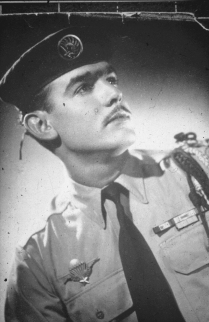 The man regarded as the father of modern bodyguarding was Major Lucien Ott, who in December 1957 founded the International Bodyguard Association (www.ibabodyguards.com).
Lucien Ott was born in 1931, into a long tradition of elite military service. In 1947 he volunteered to join the newly-formed Para-commandos of the 2nd Demi-Brigade French SAS, and was posted to the war in Indochina (Laos, Vietnam and Cambodia).
During the famous siege of Dien Bien Phu, hearing the legion was surrounded and under attack, he volunteered to parachute in during the battle. He was subsequently wounded and captured by the Vietminh. However, he escaped after six months, and fought alongside the Montagnards against the Vietminh.
In 1956, Lucien Ott was a member of the French Military Intelligence, the Deuxieme Bureau. He was ordered to review the protection afforded to France’s military VIPs and military colonial governors, due to the succession of colonial conflicts sweeping the world.
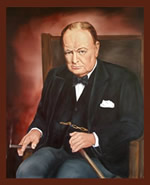 In the early days of World War II, Sir Winston Churchill ordered the creation of the Special Operations Executive – in his words, to “set Europe ablaze” and to support partisans in nazi-occupied territories. The methods developed and taught be SOE were what we now describe as terrorism. Weapons and explosives delivered by SOE would, after the war, be used by nationalist guerrillas such as Hagganah, Irgun, EOKA and the Vietminh Malayan People’s Army, to kill British, French and American personnel. These groups simply practiced what SOE had taught them.
When Lucien Ott studied the methods employed by the government bodyguards, he found that very little skill and tactics were used. Most bodyguards were just an escort with a pistol or revolver. Little or no planning went into prevention – or what is no called ‘pro-active avoidance’.
 The US Secret Service of the Department of Treasury had been set up as a counterfeit investigation department in 1865 but it wasn’t until 1901, in the wake of the assassination of
President McKinley, that President Teddy Roosevelt deployed them in dignitary protection. Years later, in the late 1940s, the Secret Service started to develop pedestrian escort drills – but, amazingly, these were based upon Ivy League American football positions.
Lucien Ott established three principles to be observed in putting together effective bodyguard methods:
- Instructors of bodyguards must have relative experience.
His view was that a bodyguard cannot learn from someone who has not done the job. Put succinctly “if you havn’t been in combat, you have no experience and understanding to pass on”
- Formulate military style SOPs (Standard Operating Procedures) and IAs (Immediate Action Drills) for bodyguards. This echoes the standard military philosophy that Proper Planning Prevents Poor Performance; and
- “Always invite Murphy to the party.” In all planning , bodyguards must plan for things to fail, and things to go wrong. Introduce contingencies that take account of Murphy’s law.
 Find us on Facebook